
Los Angeles Port Congestion in November 2026: Rail Dwell, Delays and What to Do When Your Container Is Stuck
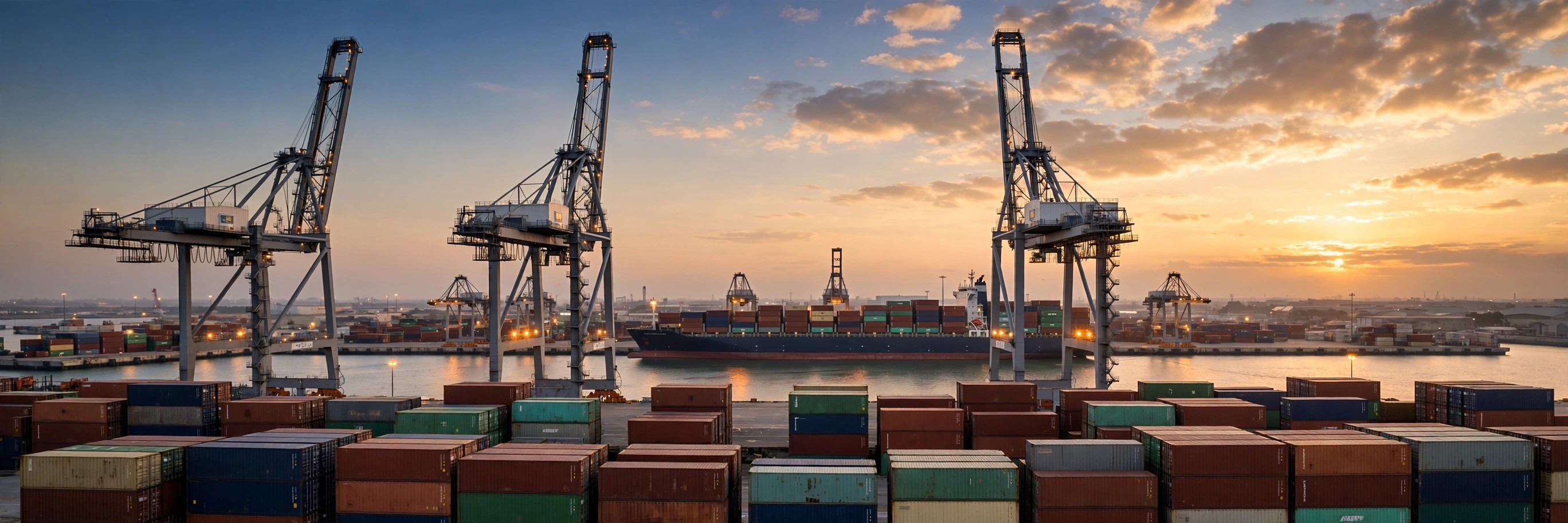
The vessel berthed on Monday. On Thursday the container is still in the port.
The tracking page says "discharged" and nothing else — a container stuck at the port with no explanation. The warehouse is asking when the goods will arrive. Your customer is asking the same thing, and the container is sitting twenty miles from the warehouse — close enough to see on a map, far enough that it might as well be two thousand miles away. This is the most common phone call in ocean freight in November 2026, and Los Angeles port congestion in November 2026 — the rail backlog at Los Angeles and Long Beach — is behind a large share of them. The vessel arriving is the end of the first leg of the journey, not the journey.
A container moves from the port to the warehouse through three legs, and each one has its own queue. The ocean leg is the one everyone watches, because it is the longest and the easiest to track. Then comes the port leg: discharge, customs release, a terminal appointment, a chassis, and a rail loading or a truck pickup. Then the inland leg: a train to a rail ramp, or a truck direct to the warehouse, and a receiving appointment at the other end. A delay at any one of those hand-offs stops the box, and the tracking page rarely tells you which hand-off it is. That is why "where is my container" is usually the wrong question. The useful question is "which node is it stuck at" — and the answer decides everything that follows, including how much free time you have left.
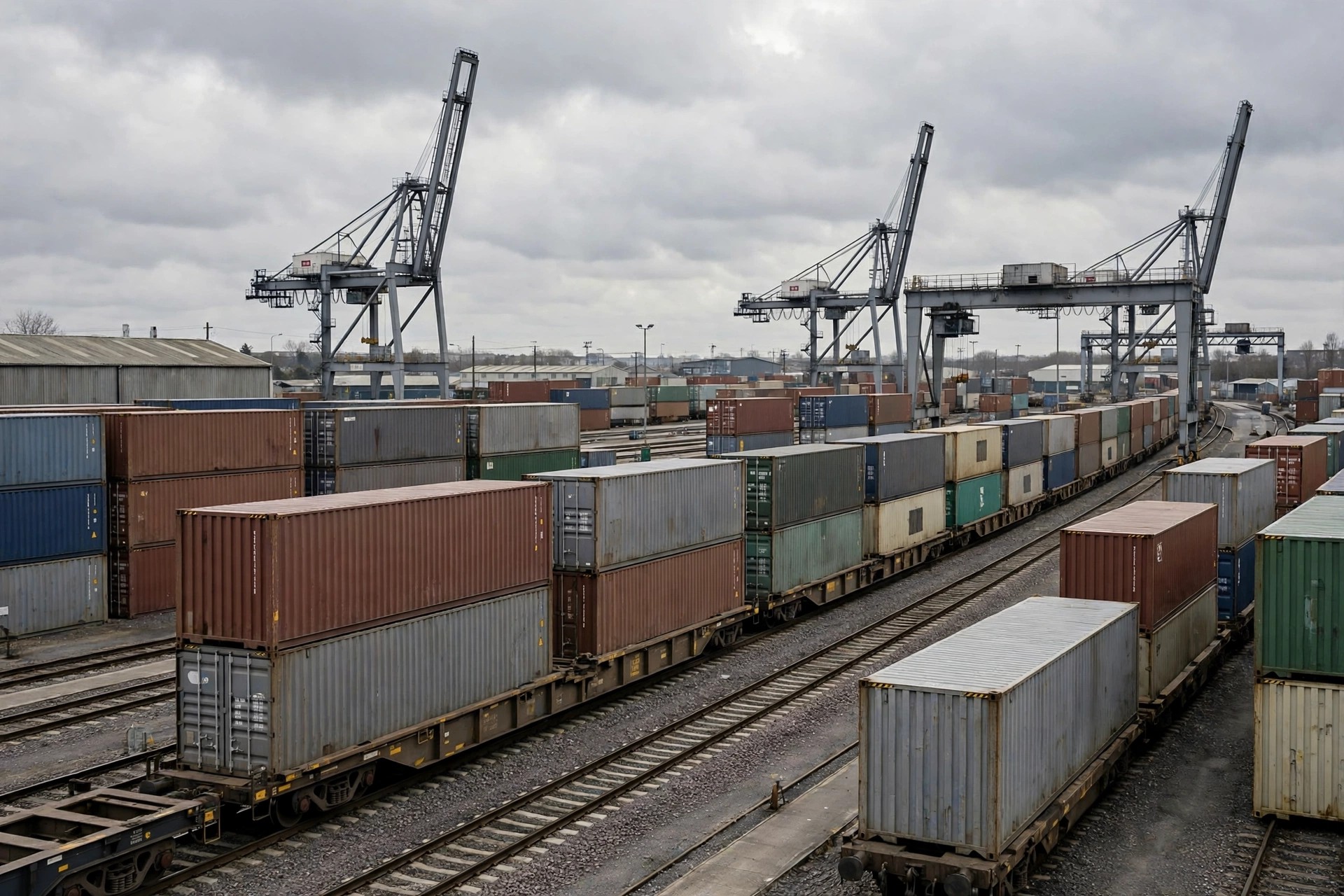
Los Angeles port congestion in November 2026: the queue is on the rail ramp
The reason the queue is there is volume. Los Angeles handled 1,026,872 TEU in October 2026, a record October for the port. Long Beach handled 937,715 TEU, up 11.7% on the year and its second-highest October ever. That is a lot of boxes arriving in a short window, and the part of the system that absorbs them slowest is the rail ramp out of the port complex, not the berth. Ships are being worked. Trains are the constraint.
The Port of Los Angeles' own on-dock rail report for 19 November counted 19,444 import containers waiting for a train, 8,504 of them waiting nine days or more, with average on-dock rail dwell of 6.6 days. That is an improvement on 13 November, when 21,505 containers were waiting and 9,055 had waited nine days or more — but it is still roughly double the normal 3–4 days. Kuehne+Nagel's port update for 11–17 November put average rail dwell at 10 days in Los Angeles and 11 days in Long Beach. Hapag-Lloyd's week 46 update (4 November) reported 5–6 days for its own boxes against a normal 3–4. The numbers differ because each source counts differently — a port-wide count, a forwarder's update, a carrier's own boxes — but the direction is the same in all of them, and it has been the same since September.
The ports are not standing still. Los Angeles has added rail cars, locomotives and crews to work the backlog, and Long Beach's chief executive said on 17 November that rail dwell at the port was running about 6.5 days against a twelve-month average of about 4 days, and improving week by week. That is worth knowing, because it tells you the delay is a backlog being worked down, not a shutdown. It also tells you not to plan on the normal 3–4 days until the backlog actually clears. Averages improve before your container does.
Rail dwell time vs truck: why the truck looks faster — and when it isn't
Local truck delivery from the port averages around three days, and on paper that makes the choice obvious. In practice the truck needs four things to line up on the same day: a chassis available at the terminal, a driver, a terminal appointment, and a warehouse that can receive the load. If any one of those is missing, the container waits — and the truck option has its own cost per container, which is different from rail and different again by destination. Rail is slower right now but steadier for inland destinations, where the train does the long haul and a short dray finishes the job. Truck is faster for warehouses near the port. The right question is not which mode is faster in general. It is where your warehouse is, when it can receive, and how much free time the container has left.
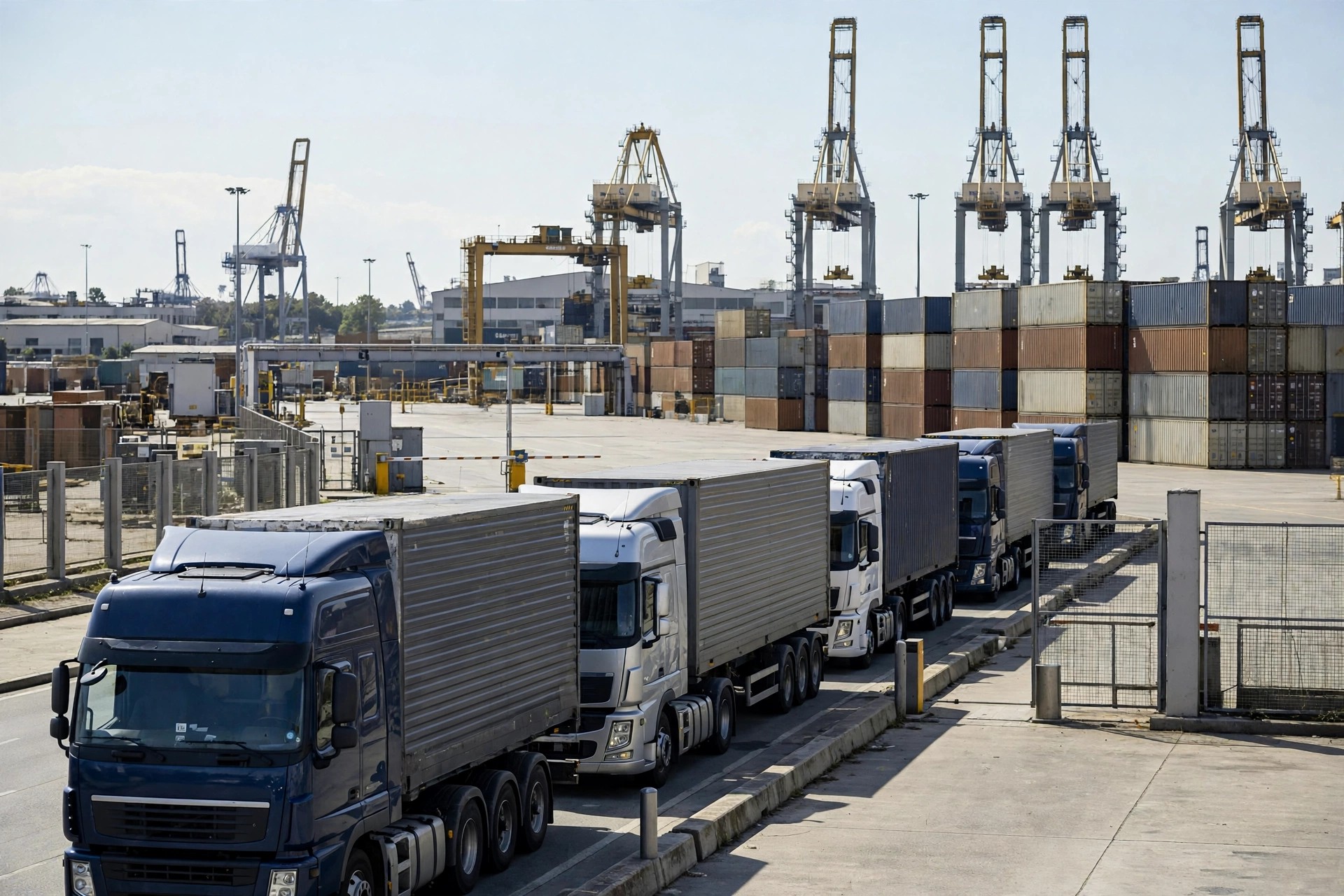
Free time and demurrage: the clock that matters
Free time is counted in days from when the container becomes available, not from when you notice it hasn't moved. Once it runs out, demurrage and detention charges start, and they accumulate daily. The number of free days varies by terminal and by carrier, so there is no single figure to quote — check it on your own shipment, and check it early. Industry benchmarks put demurrage free time at Los Angeles and Long Beach at typically 2–4 calendar days, with charges starting around $200–300 a day and escalating in tiers after that — but the controlling document is always the ocean carrier's current tariff, not a port-wide average. That is why the practical test is simple: if you cannot pick up the container from the port inside free time, the delay has already become a cost. Then work in this order. First, find which node the container is at: discharged and waiting for customs release, released and waiting for a rail loading, loaded and waiting at the ramp, or at the ramp waiting for drayage. Second, confirm customs is actually released — a container that looks available but is still held will not move whatever appointment you book. Third, align the pickup appointment with the destination warehouse's receiving window before free time runs out. An appointment the warehouse can't honour is the same as no appointment. Most of the expensive cases we see are not containers that were lost. They are containers where the appointment and the receiving window were booked on different assumptions, and nobody noticed until the free time was gone.
What to send us
If you are an Amazon FBA seller, an FBA shipping delay like this is a stockout risk, not just a late delivery — send your bill of lading number, container number and arrival date, and we will help you check where the shipment sits, whether customs is released, and whether the pickup window still lines up with the warehouse. If it doesn't, the fix is usually a rebooked appointment, not a new shipment — but it has to happen before free time expires, not after. WhatsApp +86 133 0243 9438, or email wanjiayi@usjcr.com.
Sources: Port of Los Angeles on-dock rail report, 19 November 2026 (19,444 import containers waiting for on-dock rail, 8,504 waiting nine days or more; average on-dock rail dwell 6.6 days); Port of Los Angeles operations report, 19 November 2026; FreightWaves port reports, 13 November 2026 (21,505 import containers waiting for rail at Los Angeles, 9,055 waiting nine days or more); Kuehne+Nagel port operational update, 11–17 November 2026 (average rail dwell 10 days Los Angeles, 11 days Long Beach); Hapag-Lloyd North America operations update, week 46, 4 November 2026 (rail dwell 5–6 days vs normal 3–4); Port of Los Angeles, October 2026 volume (1,026,872 TEU, record October); Port of Long Beach, October 2026 volume (937,715 TEU, +11.7% year on year) and chief executive briefing, 17 November 2026 (rail dwell ~6.5 days vs 12-month average ~4 days, improving weekly). Figures are carrier- and port-reported industry data, not a Niuku transit-time promise.